
The Ultimate Sleep Environment Reset: 5 Simple Bedroom Upgrades That Help You Sleep Deeper Naturally
Discover 5 proven bedroom upgrades that create the ideal sleep environment for deep sleep—naturally improve sleep quality without pills or complicated routines.
2/17/20269 min read
You've tried the chamomile tea. You've put your phone across the room. You might even have a wind-down routine written on a sticky note above your desk. And yet, somehow, you still drag yourself out of bed every morning wondering why you wake up tired after sleeping a full seven or eight hours.
Sound familiar? You're not doing anything wrong — you're just missing a critical piece of the puzzle.
Most sleep advice focuses almost entirely on behavior: what time you go to bed, how much caffeine you drink, whether you're scrolling too late. That stuff matters, but it only takes you so far. If you haven’t yet addressed the behavioral side of sleep, start with our complete guide on how to improve sleep naturally, then come back here to optimize your environment.
The environment you sleep in has an enormous, and often completely overlooked, influence on how deeply your body actually rests. And the good news is, you don't need to redesign your entire home to fix it.
This guide walks through a practical, five-part framework for building the right sleep environment for deep sleep — covering everything from light and temperature to sound and spinal support. Think of it as a bedroom reset, not a renovation.
Why Your Bedroom Might Be Blocking Deep Sleep?
To understand why environment matters so much, it helps to know a little about what actually happens while you sleep. Your body cycles through several stages of sleep throughout the night, including light sleep, REM (rapid eye movement) sleep, and what's known as slow-wave or deep sleep. That deep sleep stage — sometimes called N3 — is where most of the real restoration happens. It's when your brain consolidates memories, your body repairs tissue, and your immune system does much of its heavy lifting.
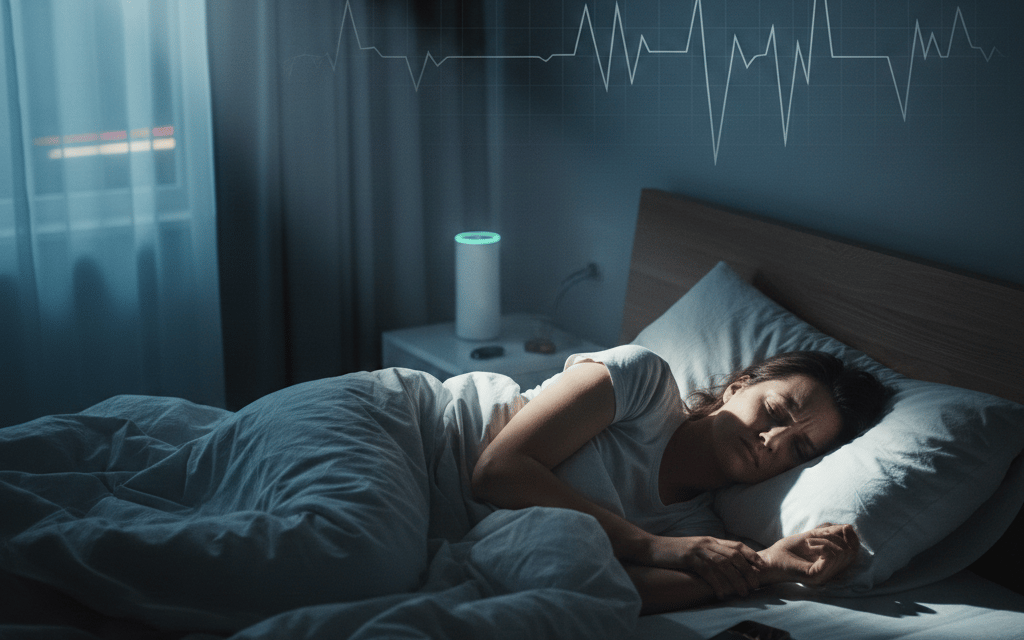
The problem is that deep sleep is also the most fragile. Even subtle disruptions — a car door outside, a sliver of light under the curtain, a room that's slightly too warm — can pull you out of it before you've had your fill. You may not even fully wake up. These are called micro-awakenings, and they're the reason sleep quality vs sleep quantity is such an important distinction. You can lie in bed for nine hours and still feel wrecked if those hours are fragmented.
Light, temperature, and noise are the three biggest environmental culprits. Each one communicates something to your nervous system — and often, that message is "stay alert." That's the last thing your body needs when it's trying to drop into its deepest rest cycles.
Sleep quality vs sleep quantity isn't just a wellness buzzword — fragmented rest can leave you more exhausted than sleeping fewer hours soundly.
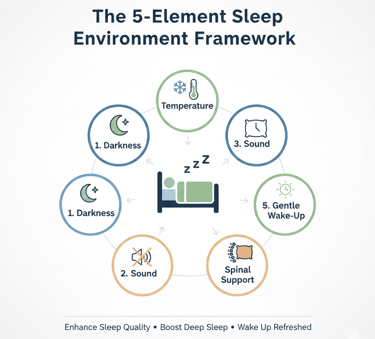
The 5-Element Sleep Environment Framework
Creating a truly supportive bedroom comes down to five core areas. Address all five, and you're giving your body the best possible conditions to cycle through deep, restorative sleep — naturally, without supplements or drastic lifestyle changes.
Let's go through each one in practical detail.
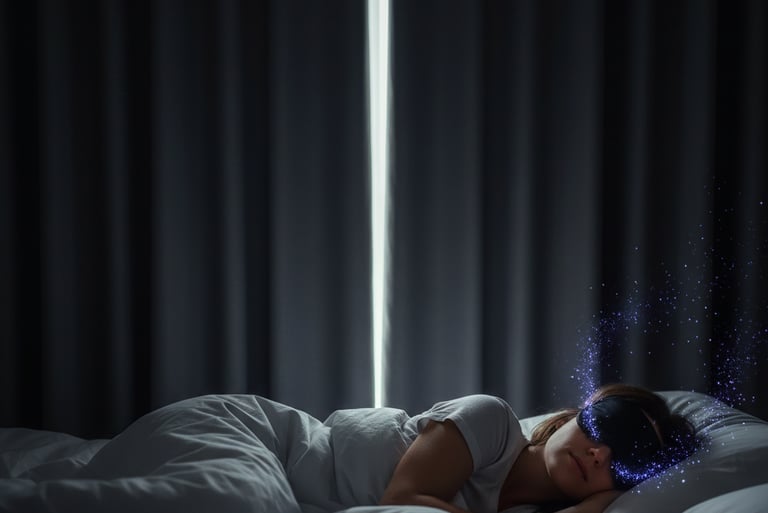
1. Total Darkness: Blackout Curtains or Sleep Mask
Here's something a lot of people underestimate: your skin can detect light, not just your eyes. Photoreceptors throughout the body are sensitive to environmental light, which means even ambient glow leaking through thin curtains can subtly disrupt your sleep cycles — especially in the early morning hours when your body is most prone to light-triggered waking.
The mechanism behind this is melatonin, the hormone that signals to your brain that it's time to sleep. Your pineal gland produces melatonin in darkness and suppresses it in response to light. The trouble is, modern bedrooms are bathed in light pollution: streetlamps, neighbor's porch lights, the blue glow of a standby TV, even the LEDs on a power strip. All of it chips away at melatonin production throughout the night.
For people who wake too early — often a sign of interrupted deep sleep — morning light is frequently the culprit. The sun rises, slips through curtains, and your body interprets it as a signal to start the day, even if your alarm is set for two hours later. This is one of the most common reasons people feel like they're not getting enough deep sleep naturally, even when their bedtime routine is solid.
The solution is genuinely simple: block the light. Properly lined blackout curtains make a significant difference, or a contoured sleep mask for those who rent or don't want to replace curtains. Either option is one of the highest-return investments you can make in your sleep environment.
Affiliate
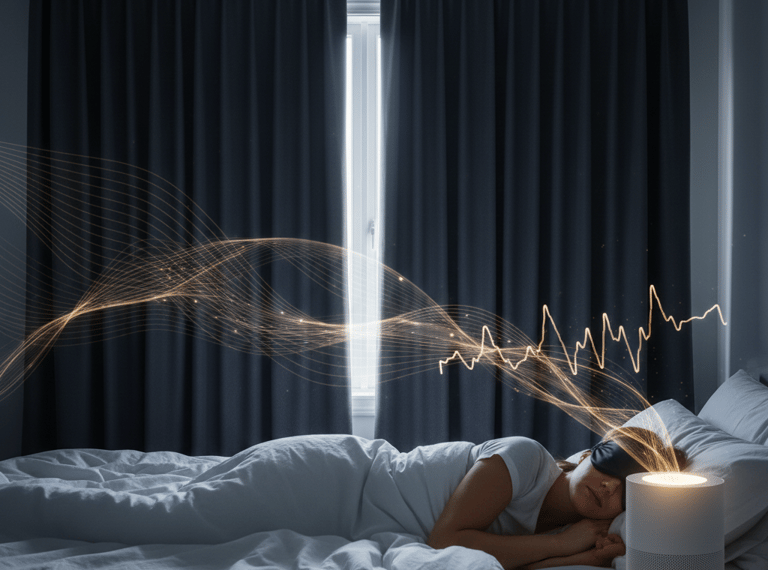
2. Sound Control: White Noise Machine
The brain never fully stops processing sound, even during sleep. This is actually a survival mechanism — your auditory system stays partially active so that genuinely alarming noises can wake you in an emergency. The problem is that in the modern world, this system is constantly being triggered by things that aren't emergencies at all: a delivery truck, someone talking in the hallway, a dog barking three doors down.
These sounds cause micro-awakenings, pulling you briefly out of deep sleep before you even register being awake. By morning, you have no memory of waking up — only the vague sense that something is off. If you've ever wondered why you wake up tired after sleeping what should have been enough hours, nighttime noise is worth investigating seriously.
What a white noise machine actually does is create a consistent, neutral sound environment that essentially masks the peaks and valleys of ambient noise. Instead of your brain spiking in response to a sudden loud sound, it registers only the steady hum of white noise. It keeps the nervous system in a lower state of alertness, which is exactly what deep sleep requires.
It's worth noting that some people find white noise machines mildly annoying at first — and that's completely normal. Give it a week before drawing conclusions. The adaptation period is short, and many people find they eventually can't sleep without one. Pink noise (a warmer, lower-frequency alternative) is worth trying too if standard white noise feels harsh.
3. Temperature Regulation: Cooling Bedding
One of the most reliable and well-documented triggers for deep sleep is a drop in core body temperature. Your body actually initiates this drop itself as part of the sleep process — but the environment needs to cooperate.
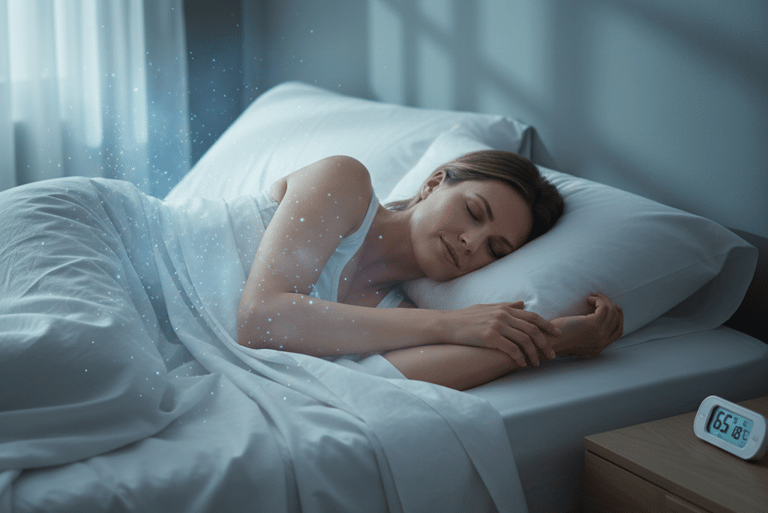
Most sleep researchers point to a bedroom temperature somewhere in the range of 65–68°F (18–20°C) as ideal for most adults, though individual preferences vary. Deep sleep is particularly sensitive to temperature shifts, which we explain in more detail in our guide on how to sleep deeper naturally
What's clear is that overheating is a significant driver of shallow sleep and middle-of-the-night waking.
When your body can't shed heat efficiently, it stays in lighter sleep stages rather than dropping into the deep, slow-wave cycles you need.
This is especially relevant for people who sleep with a partner, use memory foam mattresses (which retain heat), or live in warmer climates. And honestly, this is the one area where throwing money at the problem can genuinely pay off — cooling sheets and breathable bedding make a noticeably different experience compared to standard cotton. Materials like Tencel lyocell, bamboo, and linen are specifically good at wicking moisture and allowing airflow.
If turning down the thermostat isn't an option, a fan directed away from the bed (for ambient airflow without drying out your throat) and breathable bedding together can go a long way toward improving deep sleep naturally.
#f7870
4. Spinal Support: Contour Pillow
Here's the thing about pillows that most people don't think about: you spend roughly a third of your life with your head resting on one. That time adds up — and if your pillow isn't keeping your cervical spine (your neck) in neutral alignment, your body is spending those hours in a state of subtle physical strain.
Poor neck alignment during sleep doesn't just cause the obvious problems like stiffness and shoulder pain. It can also contribute to restlessness, frequent position shifting, and tension that keeps the nervous system from fully downregulating. People often don't connect neck discomfort with poor sleep quality, but the relationship is real and worth taking seriously.
The right pillow depends on your sleep position. Side sleepers generally need more height to fill the gap between the shoulder and head. Back sleepers need just enough support to maintain the natural curve of the neck without pushing the head too far forward. Stomach sleeping — and I say this gently — is genuinely hard on the spine no matter what pillow you use, and making the switch to a side or back position is worth exploring if deep sleep is a priority.
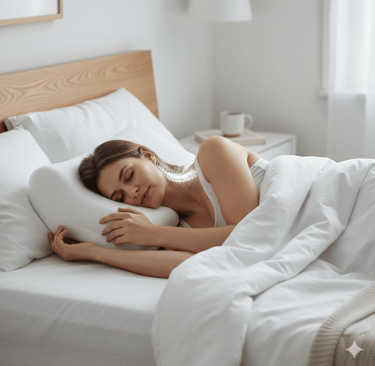
Contour memory foam pillows are shaped to cradle the neck in a way that flat or overly fluffy pillows simply cannot. They take a night or two to get used to, but for people who consistently wake with tension headaches or shoulder tightness, the difference is often dramatic.
5. Gentle Wake-Up: Sunrise Alarm Clock
How you wake up matters more than most people realize — not just for how you feel in the morning, but for the quality of the sleep directly preceding it.
A jarring alarm sound — and yes, this includes the default sounds on most phone alarms — triggers a cortisol spike. Cortisol is your body's primary stress hormone, and it's released in a spike pattern upon waking as part of what's called the cortisol awakening response. This is a natural process that helps you become alert. But when you're shocked awake by a harsh sound, that spike is amplified, leaving you feeling anxious, groggy, and overwhelmed from the very first second of your day.
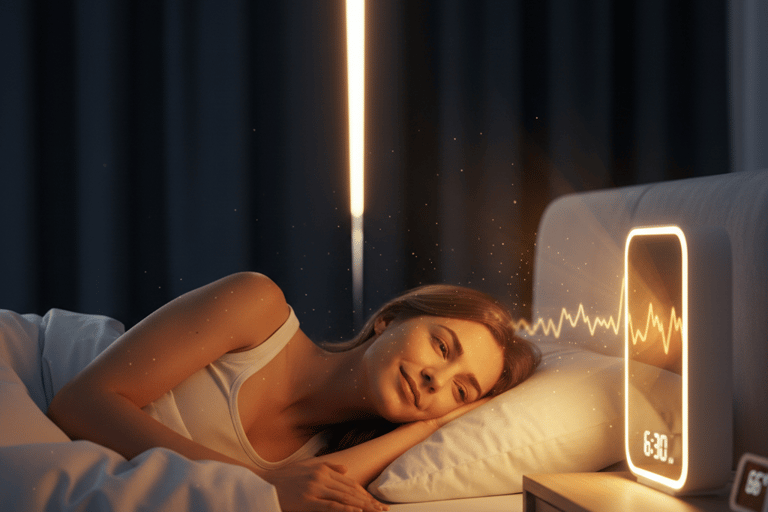
Sunrise alarm clocks (also called light therapy alarms or dawn simulators) take a different approach entirely. They begin gradually brightening the room 20 to 30 minutes before your set wake time, mimicking the way natural dawn light increases slowly. Your brain registers this gentle rise in light and begins naturally easing out of sleep — cortisol rises at its own calm pace, your body temperature begins to rise, and by the time the alarm actually sounds (usually a soft tone or birdsong), you're already most of the way to awake.
People who make this single switch often describe it as one of the most impactful changes they've made to their mornings. The difference between being dragged out of sleep and easing out of it is hard to overstate.
How to Build This Setup on Any Budget?
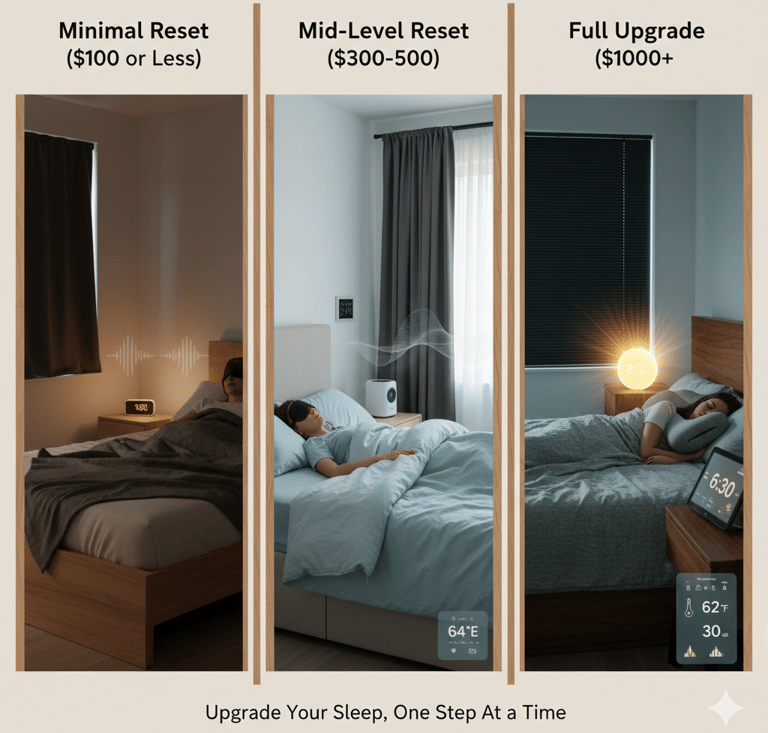
You don't need to do everything at once — and you certainly don't need to spend a lot to start seeing results. Here's how to think about building out your bedroom sleep environment at three different investment levels.
🌱 Minimal Reset — $100 or Less
Start with the highest-impact, lowest-cost changes. These alone can meaningfully shift your sleep quality:
A contoured sleep mask (covers the light issue without replacing curtains)
A free white noise app or a basic fan for sound masking
Lower the thermostat 2–3 degrees before bed
Swap your alarm for a free gradual-wake app or the softest sound available
Mid-Level Reset — $100–$350
Add dedicated hardware where apps and free solutions fall short:
Blackout curtains for your primary bedroom windows
A dedicated white noise machine with adjustable settings
One set of cooling, breathable sheets (bamboo or Tencel)
A contour memory foam pillow matched to your sleep position
✨ Full Upgrade — $350 and Above
The complete environment overhaul for maximum deep sleep support:
All of the above, plus a quality sunrise alarm clock
Blackout curtains with thermal lining (also helps with temperature)
A premium cooling mattress pad if your mattress runs warm
Smart bulbs on a warm-light, dimming schedule in the evening
Even the minimal reset addresses the three biggest disruptors — light, temperature, and sound — and that alone is enough to notice a real shift for most people. Build from there as your budget allows.
Final Thoughts
There's no magic product that will give you perfect sleep, and anyone who tells you otherwise is oversimplifying things. But there's also a lot of unnecessary suffering happening in bedrooms that are accidentally working against the people sleeping in them.
Your body already knows how to sleep deeply. It's been doing it your whole life. What it needs is an environment that stops interrupting the process — one that signals safety, stillness, and darkness to a nervous system that's been processing inputs all day long. That's really all the bedroom setup for better sleep is about: removing friction so your body can do what it naturally wants to do.
Start with one change. Maybe it's taping a towel over a streetlight gap this weekend, or switching your alarm to the softest setting available tomorrow morning. Small changes stack, and the cumulative effect of addressing even two or three of these five areas is usually enough to notice a real difference in how rested you feel.
Good sleep isn't a luxury. It's the foundation that everything else — energy, mood, focus, health — is built on. Treat your bedroom like it matters, because it genuinely does.

Ready to Learn More?
Explore our other sleep guides, wellness deep-dives, and practical health explainers on ExplainWell.io — written in plain language, backed by solid research.