How to Improve Sleep Naturally - A Complete Wellness Guide
Struggling to feel rested even after a full night’s sleep? This complete wellness guide explores natural, practical ways to improve sleep quality and wake up feeling clearer and more refreshed.
1/7/202613 min read


In this comprehensive guide, you’ll learn:
Why sleep quality affects energy, mood, and long-term wellness
The most common lifestyle-related reasons people struggle with sleep
How sleep cycles work and why interruptions matter
Practical, natural ways to improve sleep quality
How sleep posture, environment, and habits influence rest
When lifestyle improvements may not be enough
You can explore the full guide or jump to the sections most relevant to your situation.
Introduction
Sleep is one of the most fundamental pillars of well-being, yet many people wake up each morning feeling less rested than they expected. You might go to bed at a reasonable hour, spend enough time in bed, and still start the day feeling foggy, drained, or slightly off.
Poor sleep doesn’t just lead to tiredness. Over time, it can quietly affect focus, mood, motivation, and how resilient you feel during the day — even when everything else in your routine seems “right.”
The encouraging news is that many sleep challenges are linked to everyday habits and environmental factors rather than complex medical issues. Small, intentional adjustments to how you wind down, sleep, and structure your environment can make a meaningful difference over time.
This guide offers a practical, natural approach to improving sleep quality. Whether you struggle with falling asleep, staying asleep, or waking up feeling unrefreshed, you’ll find clear explanations and realistic strategies to help you build healthier sleep patterns and more restorative nights.
Why Quality Sleep Is Essential for Overall Wellness?
Sleep isn’t simply a pause between days. It’s an active process that supports how you think, feel, and function.
Energy and Mental Clarity
When sleep is consistent and restorative, your brain has time to process information, consolidate memories, and prepare for the day ahead. When sleep quality suffers, mental clarity often goes with it. Concentration becomes harder, reaction times slow, and simple decisions require more effort.
Many people notice this as a lingering sense of mental fog — even on days when their body doesn’t feel physically exhausted. If this sounds familiar, you may find it helpful to explore why mental fog can persist even when you feel rested.
Emotional Balance and Mood
Sleep plays a quiet but powerful role in emotional regulation. With adequate rest, it’s easier to manage stress, stay patient, and keep perspective. When sleep is disrupted, small frustrations tend to feel bigger, and emotional resilience can wear thin.
This isn’t a personal failing — it’s a natural response to a nervous system that hasn’t had enough time to recover.
Physical Recovery and Immune Support
During sleep, your body shifts into maintenance mode. Muscles recover from daily strain, tissues regenerate, and your immune system strengthens its defenses. Consistent, quality sleep supports your body’s ability to repair itself and respond to everyday physical demands.
Long-Term Well-Being
One poor night affects how you feel tomorrow. Repeated poor sleep, however, can gradually influence energy levels, motivation, and overall vitality. Healthy sleep patterns support long-term well-being in ways that often go unnoticed — until sleep quality declines.
Common Reasons People Struggle With Sleep
Understanding what disrupts your sleep is the first step toward improving it. If you recognize yourself in more than one of the reasons below, that’s completely normal. Most sleep challenges don’t come from a single cause, but from several small factors adding up over time.
Stress and Mental Overstimulation
Racing thoughts, worries about tomorrow, or difficulty "turning off" your mind are among the most frequent sleep disruptors. When your nervous system remains activated into the evening, it becomes difficult to transition into a restful state.
Stress-related sleep issues often benefit from specific relaxation techniques and evening routines. Dedicated guides exploring stress management and wind-down strategies can provide targeted approaches for calming an overactive mind.
Inconsistent Sleep Schedules
Your body relies on internal rhythms that thrive on predictability. Going to bed and waking up at different times from day to day can confuse these rhythms, making it harder to fall asleep when you want to and wake feeling refreshed.
Even small inconsistencies — especially on weekends — can affect how smoothly your body transitions into sleep.
Poor Sleep Posture and Physical Discomfort
Waking with neck pain, shoulder tension, or back discomfort often indicates that your sleeping position or support isn't optimal. Physical discomfort during the night fragments sleep, even if you don't fully wake up.
The way you position your body, the support your spine receives, and how your head and neck align all influence whether you sleep soundly or toss and turn. Specific articles addressing sleep posture and comfort solutions can help you identify and address these physical factors.
An Unoptimized Bedroom Environment
Your bedroom's atmosphere powerfully affects sleep quality. A room that's too warm, too bright, or cluttered can subtly undermine rest without you fully realizing it.
Creating an environment that promotes sleep involves multiple factors working together. While the basics matter, dedicated guides on bedroom optimization can help you fine-tune each element for maximum benefit.
Noise, Light, and Air Quality
Environmental disruptions like traffic noise, light from electronics or street lamps, or stuffy air can all interfere with deep, restorative sleep. Some disruptions wake you directly, while others reduce sleep quality without fully waking you.
Addressing these environmental factors often requires specific strategies and tools. Detailed resources on managing your sleep environment can provide practical solutions for each type of disruption.
Snoring and Nighttime Breathing Discomfort
Snoring affects not just the person snoring but often their sleep partner as well. It can indicate partial airway obstruction during sleep, leading to lighter, less restorative rest.
Various comfort-based approaches may help reduce snoring and improve breathing ease during sleep. Since this is a complex topic affecting many people, specialized articles exploring snoring causes and non-medical comfort solutions can offer more comprehensive guidance.
How Sleep Works? A Simple Explanation
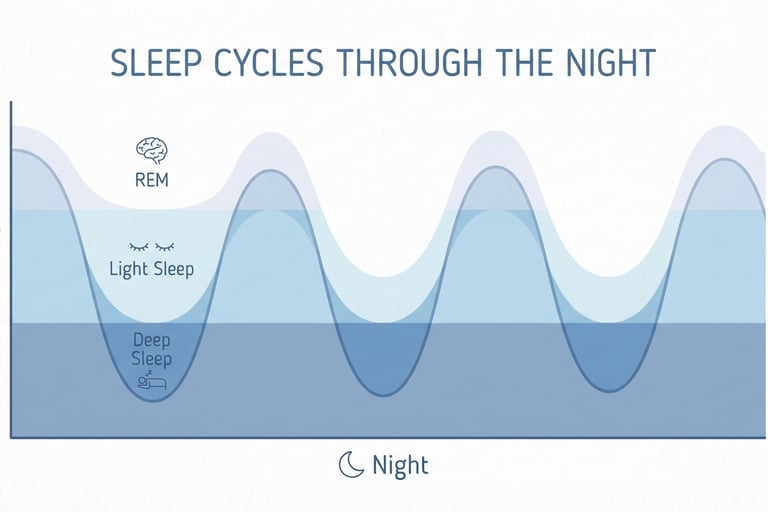
Sleep isn't a single, uniform state. Throughout the night, you cycle through distinct stages approximately every 90 minutes.
Sleep Cycles and Stages
Light Sleep serves as the entry point and transition phase. Your body begins to relax, your heart rate slows, and you become less responsive to your surroundings. Light sleep is easily disrupted but also necessary for moving into deeper rest.
Deep Sleep is when the most restorative processes occur. Your body temperature drops, muscle repair intensifies, and your immune system performs maintenance activities. Deep sleep is harder to interrupt and leaves you feeling disoriented if awakened abruptly.
REM Sleep (Rapid Eye Movement) is when most vivid dreaming occurs. This stage supports emotional processing, memory consolidation, and cognitive function. REM sleep typically increases as the night progresses.
Why Interruptions Reduce Sleep Quality
Each time you wake fully or partially during the night, you interrupt these natural cycles. Frequent disruptions mean you may spend more time in lighter stages and less time in the deep, restorative phases your body needs most.
Even brief awakenings you don't remember can fragment your sleep architecture. This explains why you might sleep for eight hours yet still feel unrested—the quality of those hours matters as much as the quantity.
The Importance of Consistency
Your body's internal clock, often called your circadian rhythm, regulates when you feel alert and when you feel sleepy. This rhythm responds to consistent patterns.
When you maintain regular sleep and wake times, your body anticipates these transitions and prepares accordingly. Hormones that promote wakefulness and sleepiness release at predictable times, making it easier to fall asleep quickly and wake feeling alert.
Irregular schedules confuse this system, creating a sense of being perpetually out of sync with your natural rhythms.
Natural Ways to Improve Sleep Quality
Improving sleep naturally means addressing several factors together. No single habit or tool fixes everything, but small improvements across multiple areas can create meaningful change.
Building Healthy Bedtime Routines
Consistent pre-sleep routines signal to your body that it's time to wind down. These routines might include reading, gentle stretching, journaling, or other calming activities performed in the same sequence each evening.
The key is consistency and choosing activities that genuinely relax you rather than stimulate your mind.
Improving Sleep Posture and Comfort
How you position your body affects both sleep quality and how you feel the next morning. Attention to spinal alignment, neck support, and overall comfort can reduce nighttime movement and help you stay in deeper sleep stages longer.
Many people benefit from adjusting their sleeping position or enhancing their physical support during sleep. This area is substantial enough that detailed guides focusing specifically on sleep posture and comfort solutions can provide more comprehensive assistance.
Optimizing the Sleep Environment
Your bedroom should function as a sanctuary for rest. This means managing light exposure, controlling temperature, reducing clutter, and creating an atmosphere that feels calm and purposeful.
Small environmental adjustments often yield significant improvements. Because optimizing your sleep space involves multiple considerations, dedicated resources exploring each environmental factor can help you create ideal conditions.
Managing Noise, Light, and Air
External disruptions from noise and light interfere with sleep continuity, while air quality affects comfort and breathing ease. Addressing these factors may require different approaches depending on your specific circumstances.
Some solutions are simple and immediate, while others involve more thoughtful planning. Comprehensive guides on environmental control can walk you through options for each type of disruption.
Increasing Awareness Through Sleep Tracking
Understanding your current sleep patterns helps you identify what's working and what needs adjustment. Whether through a journal, wearable device, or sleep app, tracking provides insights you might otherwise miss.
Awareness of your sleep duration, quality, and patterns allows you to experiment with changes and observe their effects over time.
Building Healthy Sleep Habits
Improving sleep isn’t about doing everything perfectly for a few nights. It’s about small habits you repeat often enough that your body begins to expect them. Consistency matters far more than intensity.
Consistent Sleep and Wake Times
Choose a bedtime and wake time that allows for adequate sleep—typically seven to nine hours for adults—and stick to them as closely as possible, even on weekends.
This consistency reinforces your circadian rhythm. Within a few weeks, you'll likely find it easier to fall asleep at your chosen bedtime and wake naturally around your target time.
If you must adjust your schedule, do so gradually, shifting by 15-30 minutes every few days rather than making dramatic changes all at once.
Evening Routines That Signal Rest
Your body needs clear signals that the active part of your day has ended. Create a routine that begins 30 to 60 minutes before your target bedtime.
This might include dimming lights throughout your home, changing into comfortable sleepwear, performing personal care routines, and engaging in genuinely relaxing activities. The specific activities matter less than their calming nature and consistent timing.
Avoid tackling stressful tasks, difficult conversations, or intense planning during this wind-down period. Save those for earlier in the day when your mind is naturally more equipped to handle them.
Managing Screens and Stimulation Before Bed
Electronic devices emit blue light that can suppress melatonin production, the hormone that helps you feel sleepy. The content on screens—whether work emails, news, or social media—also stimulates mental activity when you're trying to wind down.
Consider establishing a "screens off" time at least 30 to 60 minutes before bed. If you must use devices, enable night mode settings that reduce blue light emission, and choose calm, non-stimulating content.
Books, audio content, gentle conversation, or quiet hobbies provide better alternatives for evening relaxation.
Nutrition and Hydration Considerations
What you consume in the hours before bed affects your sleep quality. Large meals close to bedtime can cause discomfort and disrupt rest. Heavy, spicy, or acidic foods may trigger heartburn when you lie down.
Caffeine remains active in your system for several hours, so afternoon and evening consumption can interfere with falling asleep. Even if you can fall asleep after coffee, it may reduce your deep sleep quality.
Alcohol might initially make you drowsy, but it disrupts sleep cycles later in the night, leading to fragmented, less restorative rest.
Stay adequately hydrated throughout the day, but moderate fluid intake in the final hours before bed to minimize nighttime bathroom trips.
Sleep Posture and Physical Comfort
Physical comfort during sleep is more important than many people realize. Your sleeping position and the support you receive throughout the night directly influence sleep quality and next-day physical well-being.
Why Comfort Matters?
Discomfort—whether from pressure points, poor alignment, or inadequate support—triggers movement and micro-awakenings throughout the night. You may not remember these brief disruptions, but they prevent you from maintaining the deep, continuous sleep your body needs.
Beyond sleep quality, poor positioning contributes to morning stiffness, persistent tension, and gradual physical strain over time.
Impact of Sleeping Positions
Most people naturally favor one primary sleeping position, but each position creates different support needs.
Back sleeping generally promotes good spinal alignment when properly supported, particularly for the natural curve of your lower back and the neutral position of your neck.
Side sleeping is common and can be comfortable with appropriate support that keeps your spine straight and your head level with your shoulders. Without proper alignment, side sleeping can strain your neck and create pressure on your shoulders and hips.
Stomach sleeping often creates the most alignment challenges, potentially straining your neck and lower back. If this is your preferred position, specific adjustments can help reduce strain.
Importance of Proper Neck and Spinal Alignment
Your spine has natural curves that should be maintained during sleep. When your head, neck, and spine remain in neutral alignment, your muscles can relax fully, and pressure distributes evenly.
Poor alignment forces certain muscles to work throughout the night to compensate, leading to tension, discomfort, and reduced sleep quality.
The height, firmness, and shape of your support all influence whether you maintain good alignment in your preferred sleeping position.
Because sleep posture is a detailed topic with position-specific considerations, dedicated guides focusing on alignment, support options, and comfort solutions can provide more thorough assistance tailored to your needs.
Creating a Sleep-Friendly Bedroom Environment
Your bedroom’s setup influences how easily you fall asleep and how well you stay asleep.
Light Exposure and Darkness
Light is one of the most powerful signals affecting your sleep-wake cycle. Even small amounts of light during the night can reduce melatonin production and lighten your sleep stages.
Artificial light from electronics, street lamps, or hallways can all interfere with rest. Creating true darkness in your bedroom—or effectively blocking your eyes from light—helps maintain natural sleep patterns.
During the day, exposure to bright natural light, especially in the morning, reinforces healthy circadian rhythms and can improve your nighttime sleep quality.
Noise Control and Sound Consistency
Sudden noises and variable sound levels disrupt sleep more than consistent ambient noise. A quiet environment is ideal, but when that's not possible, masking disruptive sounds with consistent background sound can help.
The key is predictability. Your brain can adapt to steady sounds but remains alert to sudden changes or unexpected noises.
Different strategies work for different living situations. Some people need complete silence, while others sleep better with consistent gentle sound. Finding what works for your environment and preferences makes a meaningful difference.
Temperature and Air Quality
Your body temperature naturally drops as you prepare for sleep. A cooler bedroom—typically between 60 and 67 degrees Fahrenheit for most people—supports this natural process.
Rooms that are too warm interfere with sleep onset and can cause nighttime awakenings. Personal comfort varies, so finding your optimal temperature may require some experimentation.
Air quality also matters. Stuffy, stale, or dry air can affect breathing comfort and sleep quality. Adequate ventilation, appropriate humidity levels, and clean air all contribute to better rest.
Bedroom Setup and Minimalism
Your bedroom's visual appearance and organization affect your mental association with the space. A cluttered, multipurpose room sends mixed signals about its function.
When possible, reserve your bedroom primarily for sleep and rest. Remove work materials, exercise equipment, and other items associated with active tasks.
A visually calm, organized space promotes mental relaxation. This doesn't require perfection or expensive furnishings—simply creating a sense of order and purpose in the space can shift how you feel when you enter it.
Tools and Products That Can Support Better Sleep
Sleep-related tools work best as supportive elements, not standalone solutions.
Sleep Comfort Accessories
Pillows, bedding, and support cushions affect alignment and comfort. The right choice depends on sleep position, body type, and personal preference.
Sleep Environment Tools
Tools that manage light, sound, temperature, or air quality can help reduce environmental disruptions and support deeper rest.
Sleep Tracking Devices for Awareness
Tracking devices provide insight into patterns and trends. Used thoughtfully, they help guide adjustments rather than replace healthy habits.
Understanding Snoring and Nighttime Discomfort
Snoring is remarkably common, affecting a significant portion of adults at least occasionally. While often dismissed as merely annoying, snoring can indicate disrupted breathing during sleep and may reduce sleep quality for the person snoring and their partner.
Snoring in Non-Medical Terms
Snoring occurs when airflow through the mouth and nose becomes partially obstructed during sleep, causing surrounding tissues to vibrate and create sound.
Several factors contribute to snoring. When sleeping, the muscles in your throat and mouth relax. In some positions or circumstances, this relaxation partially narrows the airway. Air passing through this narrowed space creates turbulence and vibration.
Body position, particularly sleeping on your back, can increase snoring as gravity affects how tissues settle in your throat. Nasal congestion from allergies or colds also forces mouth breathing, which often increases snoring likelihood.
Lifestyle and Comfort Factors
Various lifestyle factors influence snoring frequency and intensity. Being overweight or having excess tissue around the neck can contribute to airway narrowing during sleep. Alcohol consumption relaxes throat muscles more than usual, often increasing snoring.
Sleep position matters significantly. Side sleeping typically reduces snoring compared to back sleeping, as it prevents the tongue and soft tissues from collapsing backward into the airway.
The height and support of your pillow affects head and neck positioning, which in turn influences airway openness. Finding a position that keeps your airway as open as possible can help reduce snoring.
Emphasizing Support, Not Treatment
It's important to understand that snoring sometimes indicates more significant breathing disruptions during sleep. If snoring is loud, frequent, or accompanied by gasping, pausing in breathing, or severe daytime fatigue, these may be signs that warrant professional evaluation.
For many people, however, occasional or mild snoring responds well to comfort-based adjustments and lifestyle modifications.
Because snoring has multiple potential contributing factors and various comfort approaches that may help, dedicated articles exploring this topic in depth can provide more comprehensive guidance on position adjustments, comfort solutions, and when to seek professional advice.
When Lifestyle Improvements May Not Be Enough
While lifestyle optimization and environmental improvements help many people significantly enhance their sleep quality, these approaches have limits.
Persistent sleep difficulties despite consistent effort with natural strategies may indicate factors beyond lifestyle alone. Some people experience sleep challenges related to chronic health conditions, medications, or other circumstances that require professional guidance.
If you've made sustained efforts to improve your sleep habits, environment, and comfort but still struggle with falling asleep, staying asleep, or feeling rested, consider consulting a healthcare provider. This is particularly important if your sleep problems significantly affect your daytime functioning, mood, or overall well-being.
Snoring accompanied by breathing pauses, severe restlessness, or unusual sensations that disrupt sleep may also warrant professional evaluation.
Lifestyle optimization and professional guidance aren't opposing approaches—they're complementary. Many people benefit most from combining evidence-based lifestyle practices with professional assessment and recommendations when needed.
Never hesitate to seek professional input when sleep difficulties persist or worsen. Quality sleep is too important to struggle with unnecessarily when help is available.
Final Thoughts: Building a Personalized Sleep Strategy
Sleep improvement isn’t a one-size-fits-all process, and it’s rarely about finding a single fix. The most effective approach starts with understanding your own patterns and focusing on the factors that affect you most.
Make changes gradually. Observe what helps. Give your body time to adapt.
Better sleep is built through awareness, consistency, and patience. By supporting your sleep thoughtfully, you’re investing in clearer thinking, steadier energy, and better overall well-being — night after night.